Everybody normally has tissue near the back passage that can sense the difference between solid, liquid and stool. It is also part of the continence mechanism. In some cases if the pressure upstream builds up then this tissue swells and that swollen tissue is what we call piles (or haemorrhoids). In about half the cases of piles it is this upstream pressure that causes them, the other half just occur on their own.
Factors that cause piles are: constipation, diarrhoea, straining on the toilet and classically pregnancy.
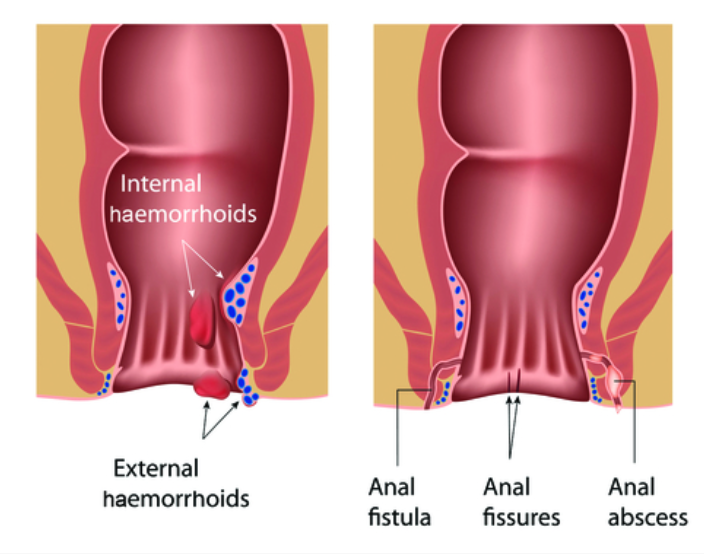
The two most common symptoms of piles are bleeding and itching. The itching is caused by a small amount of mucous that the piles produce, which people often don’t notice. When the piles get bigger people can notice the lump and it can occasionally be very painful. It is important to know that there are other, more serious causes of these symptoms (particularity bleeding) and you should not ignore these and I would happily see you in clinic to discuss this.
The first step in the managing of piles is to make sure there is not a more serious, underlying cause of this bleeding. This will often involve a simple camera test to have a look at the bowel higher up (either a flexible sigmoidoscopy or a colonoscopy).
Once something more serious is ruled out, the next step is to try simple dietary modifications including laxatives. If this doesn’t work and the piles are still causing significant problems then we move on to surgery.
There are a variey of options for treatment of piles and we would discuss this when we met in clinic.
All operations done for haemorrhoids can be performed as a day case.
Rob is a Consultant Colo-Rectal Surgeon at the Royal Devon and Exeter NHS Foundation Trust and also sees patients privately at Exeter Nuffield - contact sophie.punter@nuffieldhealth.com 01392 262183

